
Raccoon Removal in McKinney, TX: A Homeowner’s Guide to Protecting Your Property
Raccoons are one of the most persistent and destructive wildlife intruders in North Texas. Across McKinney and nearby communities like Prosper, Allen, New Hope, and Fairview, homeowners frequently encounter raccoons entering attics, tearing through rooflines, and causing costly structural damage. What makes raccoons particularly challenging is not just their strength and agility, but their intelligence — once they identify an attic as a safe nesting site, they can return year after year unless the home is properly secured.
Understanding how raccoons behave, why they enter homes, and what signs indicate their presence is the first step toward keeping your property protected. At Pest Therapy, we specialize in humane wildlife removal and exclusion designed specifically for the construction styles and environmental factors unique to McKinney homes.
Why Raccoons Are Drawn to McKinney Homes
McKinney’s suburban layout, rapid development, and proximity to creeks, wooded areas, and greenbelts create ideal conditions for raccoon activity. As neighborhoods expand into previously wooded spaces, raccoons adapt quickly and learn to take advantage of new food sources, sheltered spaces, and weakened access points around homes.
Attics offer warmth, quiet, safety from predators, and abundant insulation for nesting — all things raccoons instinctively seek. During fall and winter, activity spikes as adult raccoons look for dry, insulated areas to overwinter or raise their young. Even small construction gaps in soffits, roof returns, siding transitions, and vents can become quick entry points for these animals.
Raccoons are also strong climbers. They use fences, downspouts, A/C line sets, and overhanging branches to reach the roof. This ability to access elevated areas makes any vulnerable spot on a home a potential doorway.
Recognizing Signs of a Raccoon Infestation
If raccoons make their way into an attic or wall void, they usually leave noticeable signs. Homeowners often hear loud movement late at night — unlike small rodents, raccoons produce heavy thumps, dragging sounds, or slow walking noises as they move around the attic. Baby raccoons create distinct chirping or whining sounds during breeding season, which can last well into spring.
Damage along the exterior is another common indicator. Raccoons are powerful animals capable of prying open soffits, peeling back shingles, ripping off vent covers, and widening gaps created by weather or age. Inside the attic, homeowners may find compressed or shredded insulation, torn ductwork, and strong odors caused by concentrated urine or large droppings. These signs almost always point to raccoon activity and should be addressed quickly before the damage worsens.
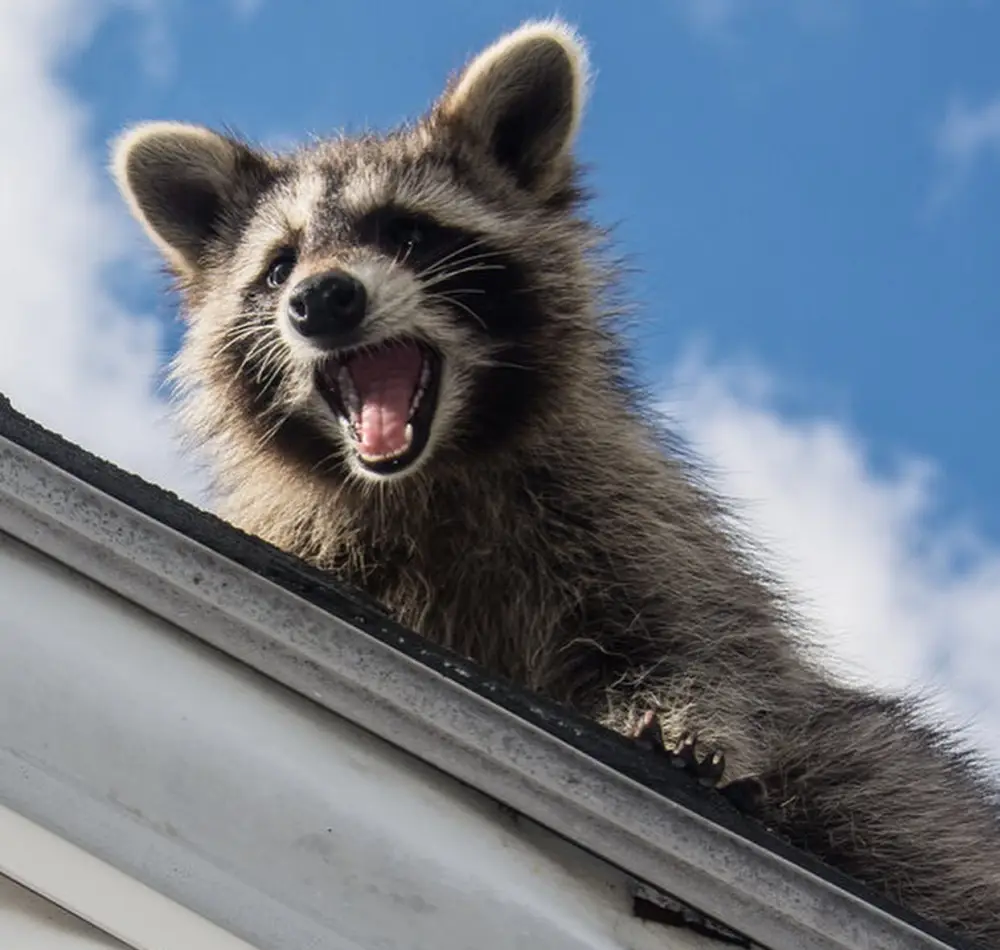
The Risks Raccoons Pose to Your Home and Health
Raccoons can cause significant disruption in a short amount of time. Once inside an attic, they create pathways through insulation, weakening the home’s thermal barrier and increasing heating and cooling costs. They can damage wiring, which raises the risk of electrical fires, and they frequently displace ductwork as they move around the attic in search of nesting spots.
Their droppings are a more serious concern. Raccoon feces can contain roundworm and other harmful bacteria that may pose health risks to humans and pets. In addition, raccoons can carry fleas, ticks, and other parasites that spread easily into household living spaces. When a mother raccoon brings her young into an attic, the contamination multiplies rapidly, making cleanup and sanitization even more essential.
Beyond structural damage and contamination, raccoons can become aggressive when cornered or when defending their young. Attempting to remove them without professional training can lead to bites, scratches, and dangerous encounters — all reasons why DIY removal is never recommended.
Why Raccoon Problems Persist Without Professional Exclusion
Many homeowners believe removing a raccoon solves the problem, but wildlife behavior makes this approach incomplete. Raccoons are territorial, and once they’ve identified a home as a suitable nesting site, they often return through the same access points — or create new ones if the original gap is sealed improperly.
This is why exclusion is the most important step. Professional exclusion involves identifying every possible entry point and reinforcing each one with durable materials designed to withstand raccoon strength. In older North Texas homes especially, roof gaps, attic vents, chimney areas, and siding transitions may need reinforcement to prevent re-entry.
Without exclusion, homeowners often face repeated wildlife intrusions, escalating damage, and unnecessary repair costs year after year.
How Pest Therapy Handles Raccoon Removal in McKinney
Our wildlife removal process is designed to address both the immediate problem and the underlying conditions that allowed raccoons to enter in the first place. We begin with a detailed inspection of the attic and exterior to understand where raccoons entered, what damage they caused, and whether young are present. Humane removal methods ensure raccoons are safely relocated according to Texas regulations, while also preventing injury to the animals or your property.
Following removal, we implement a full exclusion plan. This includes sealing gaps, securing or replacing attic vents, reinforcing soffits, and addressing any weak points along the roofline or siding. If insulation has been damaged or contaminated, we provide recommendations to restore attic health and safety. Our goal is not just to remove the raccoons, but to make sure they — and others — cannot get back inside.
Protecting Your McKinney Home Year-Round
Because raccoons are active throughout the year and especially aggressive during breeding season, homeowners benefit from regular exterior inspections and maintenance. Keeping branches trimmed, securing outdoor trash cans, removing pet food from porches, and addressing minor home repairs promptly can all reduce the likelihood of wildlife intrusion.
However, no preventive measure replaces a proper exclusion performed by a trained wildlife specialist. Homes in McKinney, Prosper, and surrounding areas often share similar construction patterns — and once you know where raccoons are likely to enter, sealing those weak points becomes the key to long-term protection.

Schedule a Wildlife Inspection Today
If you’ve heard noises in your attic or suspect raccoons may have found a way inside, Pest Therapy is here to help. Our local team understands North Texas wildlife behavior and provides safe, effective removal and exclusion solutions tailored to the McKinney area.
👉 Learn more:
Wildlife Removal McKinney – https://pesttherapytx.com/animal-control-mckinney/
👉 Helpful homeowner resource:
Wildlife Removal Guide – https://pesttherapytx.com/wildlife-removal-guide-mckinney/
Contact us today to schedule an inspection and reclaim your home from unwanted wildlife.
Pest Therapy provides trusted pest, rodent, and wildlife control for homeowners across McKinney, TX. Our team uses proven, safe solutions to protect your home and keep it pest-free year-round.
Pest Therapy
(972) 837-6783
McKinney, TX 75072
View our Google Business Profile
Quick Links
Mon–Fri: 8:00 AM – 5:00 PM
Sat: Closed
Sun: Closed
© 2025 Pest Therapy | Sitemap | Privacy | LLMs.txt Design by Social Climb